


Banarasi Saree Shopping Guide in Varanasi: Where to Buy, Types, History & Budget Tips


Banarasi Saree Shopping Guide in Varanasi: History, Types & Budget Shopping Tips
About Banaras (Varanasi)
Banaras (Varanasi) is one of the most ancient cities in the world and is famous for its rich culture and traditions. It is often referred to as the cultural capital of the world. Apart from temples and spiritual heritage, Banaras is also widely known for its beautiful silk sarees.
Here, you will find some of the best handloom sarees, which are carefully woven by skilled artisans using traditional techniques. This weaving art has been preserved for centuries and is still alive in Banaras today.
History of Banarasi Sarees
The history of Banarasi textiles can be traced back to the Vedic era and the time of the Mahabharata. However, the modern and luxurious brocade style of Banarasi sarees flourished from the 16th century onward.
In 1603, a severe famine in Gujarat led to the migration of many skilled silk weavers to Varanasi. Their arrival greatly enhanced the weaving techniques and styles of the city.
Traditionally, Banarasi sarees were woven using fine mulberry silk and real gold and silver zari threads. These sarees often feature motifs inspired by nature, Hindu mythology, and Mughal art, such as the famous paisley (kalga) design.
Banarasi sarees are commonly worn by brides and are considered an essential part of Indian wedding traditions. Today, Banarasi sarees are made using different fabrics such as cotton, organza, and net, making them more versatile and suitable for various occasions.
Types of Banarasi Sarees
There are many types of Banarasi sarees available in Varanasi. Some of the most popular ones include:
Katan Banarasi (Pure Silk)
Known for its soft texture and durability, Katan silk is created by twisting silk filaments. It is one of the most popular and high-quality choices, especially for bridal wear.
Organza (Kora) Banarasi
A lightweight and sheer fabric decorated with elaborate zari work using silver and gold threads, often featuring beautiful floral designs.
Georgette Banarasi
A finely crêped and lightweight fabric that provides a modern drape while maintaining traditional weaving styles.
Tissue Banarasi
Very delicate and lightweight sarees that often have a shimmering look. These sarees are considered among the most expensive types.
Brocade Banarasi
Characterized by thick and rich weaving with gold or silver threads, creating raised and detailed patterns.
Tanchoi Banarasi
Known for intricate woven patterns made without zari threads. Many designs are inspired by traditional Chinese weaving styles.
Jamdani Banarasi
A highly refined style where motifs are woven directly into the fabric, making it lightweight yet highly decorative.
Jangla Banarasi
Famous for elaborate and heavily woven jungle-inspired patterns, often preferred for wedding sarees.
Meenakari Banarasi
Features colorful silk threads combined with gold and silver zari to create vibrant designs.
Tussar Banarasi
Made using Tussar silk, known for its natural golden texture and elegant rustic look.
Where to Buy Banarasi Sarees in Varanasi (Important Tips for Outsiders)
You can find Banarasi sarees almost everywhere in Varanasi. However, this guide is especially useful for people who are not familiar with the city.
If you visit large and famous branded shops, you may not get significant discounts. Similarly, if you visit small shops through auto-rickshaw drivers or local agents, the prices may still be higher because these middlemen usually receive a commission from the shopkeepers.
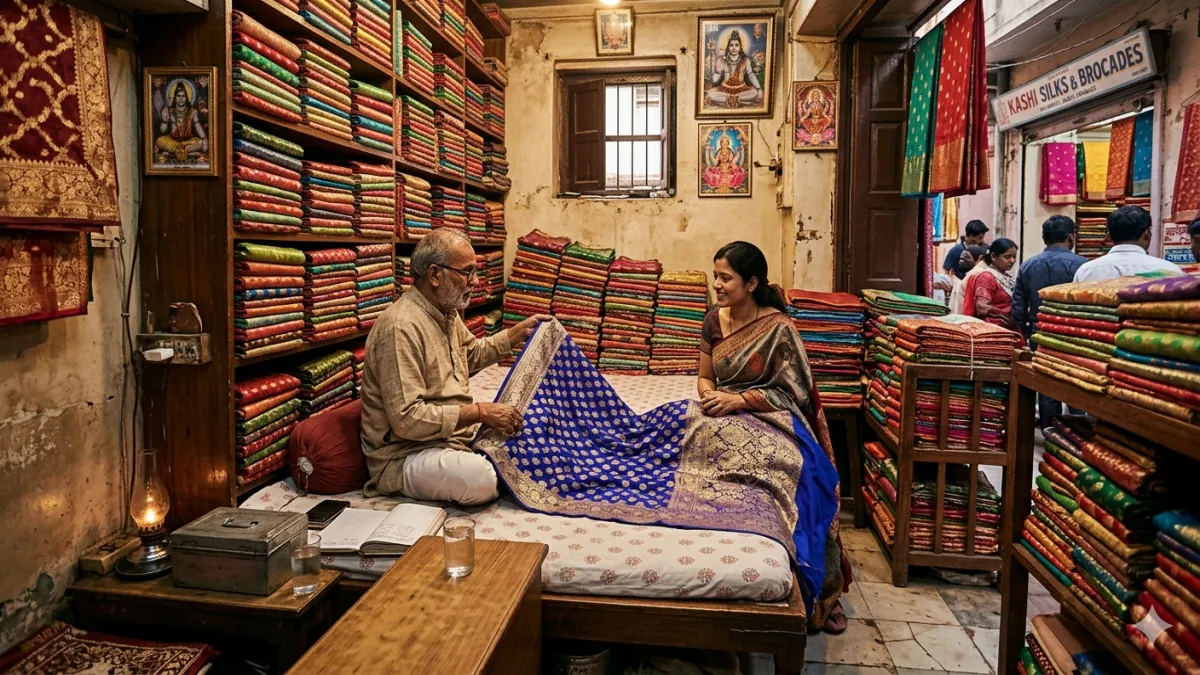
In Varanasi, many smaller traditional saree shops are locally known as “Gaddi”. These gaddis are often family-run establishments where sarees are sold directly to customers, sometimes even from the same place where weaving or wholesale trading happens.
If you contact these gaddi shops directly, you may receive better discounts compared to large showrooms. In many cases, you can call the shopkeeper directly, and they may guide you to their location or sometimes arrange transportation from nearby areas.
These smaller gaddi shops often provide similar designs and quality options to those available in branded stores, but at a much lower price, making them a preferred choice for budget-conscious buyers.
How to Reach Banarasi Saree Markets from Varanasi Junction Railway Station
Reaching the main Banarasi saree markets from Varanasi Junction Railway Station is simple if you know the correct drop points. Most vehicles cannot enter narrow market lanes, so you may need to walk a short distance.
Route to Godowlia (Recommended for Vishwanath Gali & Nearby Markets)
If you want to go to Godowlia from Varanasi Junction Railway Station:
- Take an auto-rickshaw or e-rickshaw from the railway station to Benia Bagh.
- From Benia Bagh, Godowlia is about 300 meters walking distance.
- This is one of the most commonly used and economical routes by locals.
Route to Chowk (Recommended for Traditional Saree Shops)
If you want to go to Chowk from Varanasi Junction Railway Station:
- Take an auto-rickshaw or e-rickshaw from the railway station to Maidagin.
- From Maidagin, you can walk to Chowk market.
- From Maidagin to Chowk route, you can also continue towards Godowlia and Vishwanath Gali. On the way, you will find busy market areas such as Golghar and Thatheri Bazar, which are famous for traditional Banarasi saree shops. Many smaller "gaddi" shops are located in these areas, offering a wide range of sarees at competitive prices.
- E-rickshaw fares from Maidagin to Chowk are often higher, especially during heavy pilgrim seasons.
- If you are comfortable walking, it is better to walk and save money. Otherwise, you can take an e-rickshaw if the fare suits your budget.
Underrated Banarasi Saree Markets in Varanasi
There are also some underrated Banarasi saree markets in Nati Imli (Bunkar Colony) and Jaitpura. These areas are well-known among locals for traditional weaving units and smaller gaddi shops where sarees are often available at more affordable prices compared to large showrooms.
If you plan to visit these areas, it is recommended to contact the shopkeeper in advance. Many shopkeepers can guide you with directions, and some may also arrange transport or pickup services from nearby locations.
Money-Saving Tip for Visitors
During festivals or heavy pilgrimage seasons, local transport fares may increase due to high demand. Walking short distances from drop points like Benia Bagh or Maidagin can help you save money and avoid traffic congestion.
Underrated Banarasi Saree Shops in Varanasi
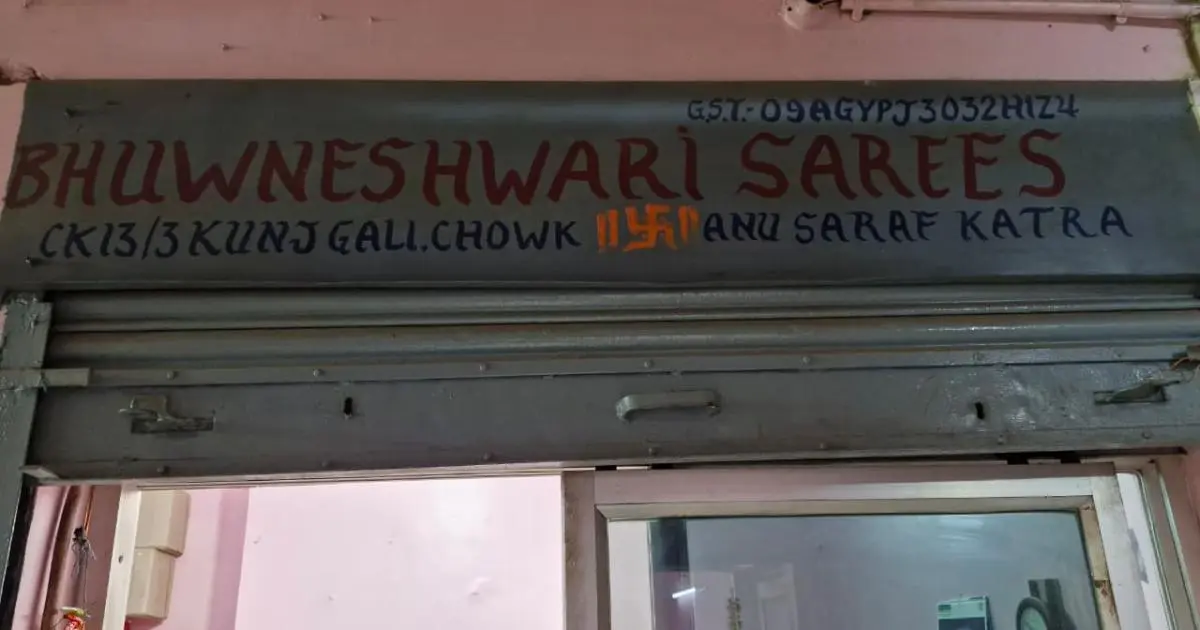
Bhuvneshwari Sarees
VaranasiBhuvneshwari Sarees – Wholesale Dealers & Traders of Banarasi SareesWelcome to Bhuvneshwari Sarees, your premier destination for authentic Banarasi sa...
Related Articles
Frequently Asked Questions
What is the best place to buy Banarasi sarees in Varanasi?
The best places to buy Banarasi sarees in Varanasi include traditional market areas like Chowk, Madanpura, Lallapura, and Vishwanath Gali, where many gaddi shops offer authentic sarees at reasonable prices.
What is a gaddi in Banarasi saree shopping?
In Varanasi, a gaddi refers to a small traditional saree shop or wholesale setup where traders sell sarees directly to customers, often at lower prices than large showrooms.
How can I reach Banarasi saree markets from Varanasi Junction Railway Station?
You can take an auto-rickshaw or e-rickshaw to Benia Bagh or Maidagin. From there, you can walk to Godowlia or Chowk markets, as large vehicles cannot enter narrow market lanes.
Are Banarasi sarees cheaper in Varanasi?
Yes, Banarasi sarees are usually cheaper in Varanasi compared to other cities because many sarees are sold directly from manufacturers or wholesale gaddi shops.
What types of Banarasi sarees are available?
Popular types of Banarasi sarees include Katan silk, Organza (Kora), Georgette, Tissue, Brocade, Tanchoi, Jamdani, Jangla, Meenakari, and Tussar sarees.
How can I identify an original Banarasi saree?
Original Banarasi sarees usually have detailed weaving, fine silk threads, and traditional motifs. Checking for silk marks and examining the reverse side of the saree can help identify authenticity.
Do Banarasi saree shops provide pickup facilities?
Some traditional gaddi shops may provide pickup or location guidance over phone, especially for customers visiting from outside the city.
What is the average price of Banarasi sarees in Varanasi?
The price of Banarasi sarees in Varanasi can range from ₹1,500 for simple designs to ₹10,000 or more for premium silk and bridal sarees.
Is walking required to reach Banarasi saree markets?
Yes, walking short distances is usually required because many saree markets are located inside narrow lanes where vehicles are not allowed.
Which route is best to reach Godowlia from Varanasi Junction?
The most common route is to take an auto-rickshaw to Benia Bagh and then walk about 300 meters to reach Godowlia.
Is it better to buy Banarasi sarees from gaddi shops or showrooms?
Many buyers prefer gaddi shops because they often offer better prices and direct deals compared to large branded showrooms.

0 Comments
Leave a Comment